What's new
Aloft Forums

Welcome to Aloft Forums. Register a free account today to become a member! Once signed in, you'll be able to participate on this site by adding your own topics and posts, as well as connect with other members through your own private inbox!

ALOFT: AH-100 Build (new title)

Oddly enough we are cutting 2 of them today for final testing.
Screenshot 2025-02-14 at 11.35.44 AM.webp
 
1. Conquered the howl
2. Fried an ESC
3. How can we introduce cooling air flow?


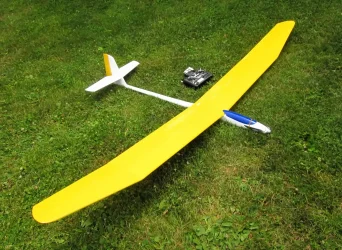
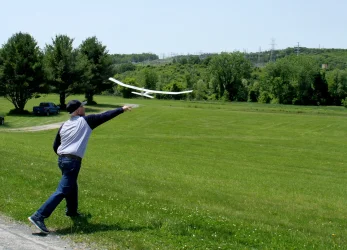
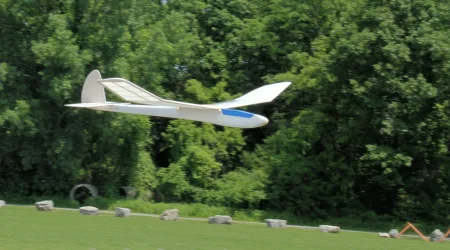
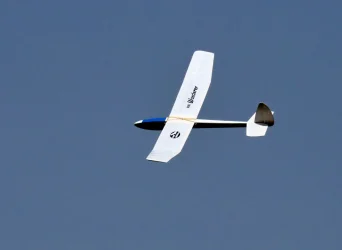
Continuing my experiments with large chord wings on the esteemed Topmodel PRELUDE fuselage,
I built a WANDERER-99 wing from drawings downloaded from Outerzone.com, and while it flew fine,
but with the slightest additional speed it made what I called a Halloween Howl sound.
Flying buddies said, "That's not a howl, that sounds like an air raid siren."

In order to fix it, I tried:
1. Closing the gap between fin and rudder. NO CHANGE IN SOUND.
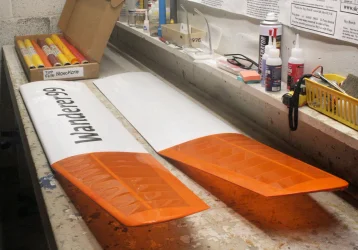
2. Adding diagonals to tip panels in front of the spar, and covering with genuine Top Flite MonoKote. QUIETER, BUT STILL A WEIRD MURMUR.
Wayne mentioned "With tips covered in MonoKote, should also cover the inner panels with Monokote."
3. I re-covered the entire wing with genuine Top Flite MonoKote. THE UNWANTED SOUND WENT AWAY ENTIRELY.
Good call Wayne. Thank you.

However, during that test flight, the motor quit on the fourth climb, but with servos still working, I landed it as a glider. No damage to the airframe.
The battery pack was warm, The motor was scalding hot, and the 40-amp Hobbywing Skywalker ESC was fried. You may know the smell of fried electronics.

The mystery is I've had 30 or more flights with this plane with no change in internal gear. Why did the gear get so hot this day?
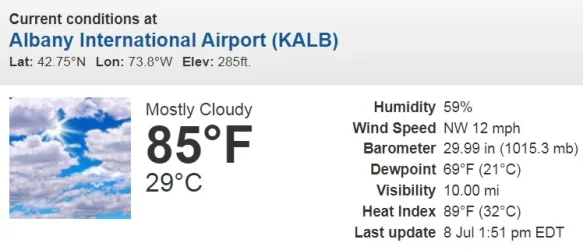
Over-propped? Flying too aggressively in the test regime? I'm thinking this was the warmest day that I have flown that plane.

The PRELUDE fuselage makes no provision for flow through air for cooling.
What are our options for introducing cooling air in a molded fuselage, with some consideration to aesthetics?
 

Attachments

  • WANDERER-99 wing on PRELUDE fuse re-covered with MonoKote_9436.webp
    WANDERER-99 wing on PRELUDE fuse re-covered with MonoKote_9436.webp
    480.7 KB · Views: 80
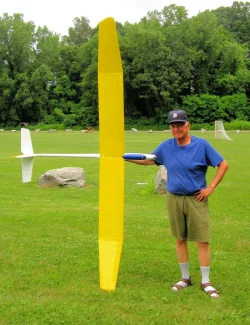
  • Dave WANDERER-99 re-covered with MonoKote 9439.webp
    Dave WANDERER-99 re-covered with MonoKote 9439.webp
    396.6 KB · Views: 69
  • KALB wx observation.webp
    KALB wx observation.webp
    28.5 KB · Views: 74
Last edited:
I usually grind in some holes just behind the firewall and a larger hole somewhere under the wing for an exit path.

I'm told as we heat up a motor to the point of magnet damage, it raises the motor KV some, this becomes a slippery slope as the added KV increase the load on the motor, thus more heat. The motor may well hang on for a number of flights, but that KV keeps climbing, and the heating is increasing. Flying on a warmer day with more throttle is for sure not going to help.
 
Very interesting. I know it was a short test flight, but I wonder how the 99 Wanderer wing compares with the other 100" wings that you tested. The Aloft Wanderer is the best flying or all my mini gliders. including a mini Drifter, GL, BOT and Oly II, not sure why, but I was actually thinking of building a Wanderer 99.

The inner panel of the Wanderer wing seems quite sturdy. I know they recommended Monokote in the manual but before reading this I would have used Aloft transparent which seems pretty stiff. I did note that the manual calls for gently shrinking the Monokote and then sticking to each rib and turbulator.

Anyway, thoughts on how the Wanderer wing compares would be interesting.

Also, is the Prelude fuselage available somewhere on the Aloft site?

Also, what is the ETA for the AH-100?

I need to build something!
 
I usually grind in some holes just behind the firewall and a larger hole somewhere under the wing for an exit path.

I'm told as we heat up a motor to the point of magnet damage, it raises the motor KV some, this becomes a slippery slope as the added KV increase the load on the motor, thus more heat. The motor may well hang on for a number of flights, but that KV keeps climbing, and the heating is increasing. Flying on a warmer day with more throttle is for sure not going to help.
Wayne,
Thank you for the cooling airflow tips.
Fascinating how heat damage to the magnets could raise the KV.
I think for the short term I might reduce the prop diameter and fly with the canopy off,
as I am interested to find out how well the MVVS motor survived the heat stroke.
// Dave


u2builder,

Very interesting. I know it was a short test flight, but I wonder how the 99 Wanderer wing compares with the other 100" wings that you tested.

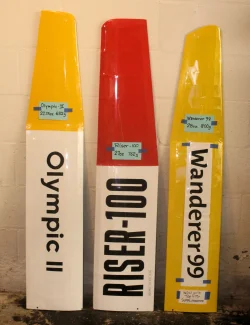
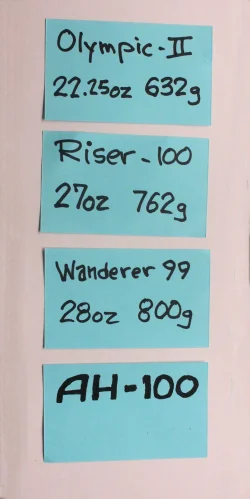
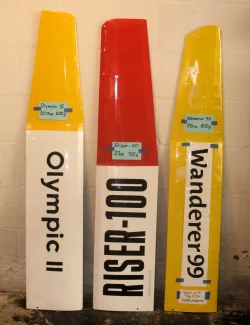
The only two I have flown together on the same day were the OLY-II and the RISER-100.
So close in glide performance and handling that I did not find anything to differentiate between them.
The WANDERER-99 is heavier, and feels tougher, stronger, a "storm bird," but glide and turning
pretty much the same as the other two. Not a huge surprise knowing the three were designed
about the same time for the same purpose: winch-launched thermal duration.

Not sure why, but I was actually thinking of building a Wanderer 99.

Could it be the fetching looks? Mark Smith sure knew how to shape a vertical.

The inner panel of the Wanderer wing seems quite sturdy.

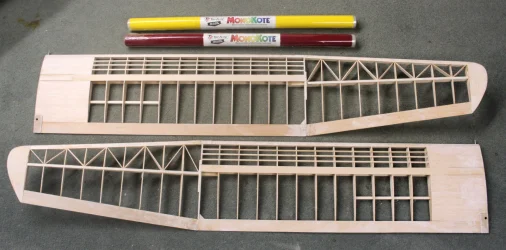
Oh yeah, sturdy all right. Check out the 3/4 inch wide spar, with full 3/16 shear webs.
The thee turbulator spars are spruce. Ribs are 3/32 balsa.
(In this photo, the diagonals in the tips were added after testing. They are not OEM.)

Also, is the Prelude fuselage available somewhere on the Aloft site?

It is. Search for PRELUDE, and you'll get the fuselage, bellcrank and tail parts.

Also, what is the ETA for the AH-100?

I am anxiously waiting for the answer to that question myself.
I am really looking forward to see how a modern design compares to the vintage designs.


// Dave

 

Attachments

  • WANDERER-99 bones_2579.webp
    WANDERER-99 bones_2579.webp
    190.9 KB · Views: 70
  • IMG_2574.webp
    IMG_2574.webp
    221.7 KB · Views: 72
  • 100-inch wing weights_2584.webp
    100-inch wing weights_2584.webp
    145 KB · Views: 67
  • 100-inch wings_2591.webp
    100-inch wings_2591.webp
    175.6 KB · Views: 73
Last edited:
My best guess for mini Wanderer performance is the lighter weight and better airfoil. The AH-100 actually has the same airfoil and we kept the wing loading pretty darn low.

We need to do some digging into our files. Too much time passed and we sent a basic kit to Dave to test fly, but seems we sent him some parts that didn't work. I need to go back into my files and make sure we produce the right stuff, and then probably do a remote build with Dave at the sametime he is building his and see if we are on the same page. We have not written instructions, and it was 1.5 or 2 years ago that I built the prototype.
 
Thanks Dave. The weight comparison was a bonus, and something I wondered about what with that wing joiner and 1/8" sheeting and spruce turbulators I am surprised the difference wasn't greater, but balsa is (can be) light, its the other stuff that adds the weight. The pictures were a bonus also. I did find the Prelude fuselage with a search.

What is the AUW of these birds with the Prelude fuselage and battery?

I built an Oly II years ago and it was 50 oz with wood fuselage, motor and 1500 mah 3s, no lead, Monokote transparent. Also a Winddrifter using my old Dynaflite Butterfly Wing (first RC plane) wing and fuselage and tailfeathers from Outerzone. The Butterfly and the Winddifter shared the same wingt.That was a few oz lighter than the Oly, a big balsa box fuselage, no ply in the front. The wing is very simple, conventional spar, no extra bracing, Chinakote but seems plenty strong and not twisty and it flies nicely.

Wayne, my mini Wanderer isn't really any lighter so it must be the airfoil, dihedral, tail and magic sauce. It just stays up longer than the others in the typically dead air and handles better.
 
  • Like
Reactions: Red
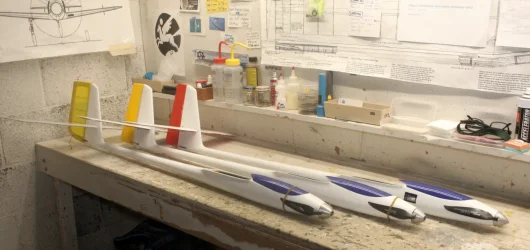
What is the AUW of these birds with the Prelude fuselage and battery?

I will weigh the three airframes and report.

The wing is very simple, conventional spar, no extra bracing...

Another candidate for simple vintage balsa glider build is the MEDICINE MAN on outerzone.

Wayne, my mini Wanderer isn't really any lighter so it must be the airfoil, dihedral, tail and magic sauce.

That's what we love, the Aloft magic sauce.

It just stays up longer than the others in the typically dead air and handles better.

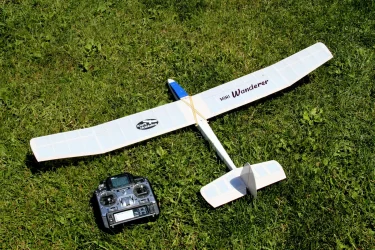
My results and impression are the same with the Aloft/Alien MINI WANDERER

My favorite remark so far this flying season came from a NFB, an experienced RC glider plot
who started our session with his motorized Olympic-II which looked to me like he set the
altitude record for the field so far this year.

When I launched my MINI Wanderer he said, "I've never seen a glider that small."
 

Attachments

  • Aloft MINI WANDERER at Maalwyck JUN-2025 SAW-2886.webp
    Aloft MINI WANDERER at Maalwyck JUN-2025 SAW-2886.webp
    722.8 KB · Views: 70
  • Dave Aloft MINI WANDERER at Maalwyck JUN-2025 SAW-22906.webp
    Dave Aloft MINI WANDERER at Maalwyck JUN-2025 SAW-22906.webp
    440.2 KB · Views: 58
  • Aloft MINI WANDERER at Maalwyck JUN-2025 SAW-2914.webp
    Aloft MINI WANDERER at Maalwyck JUN-2025 SAW-2914.webp
    195.7 KB · Views: 61
  • Aloft MINI WANDERER at Maalwyck JUN-2025 SAW-2934.webp
    Aloft MINI WANDERER at Maalwyck JUN-2025 SAW-2934.webp
    37.1 KB · Views: 65
Last edited:
  • Like
Reactions: Red
Call me silly, but I like the smaller sizes. Not great for altitude records though. LOL
 
Both the 40 amp ESC and the MVVS motor are burned, stinking, and non functional.
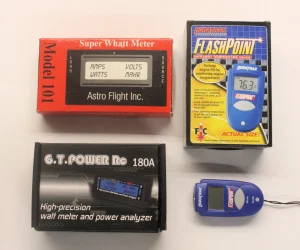
I am going to start using the ammeter and remote thermometer that I already have, and work on a cooling scheme.
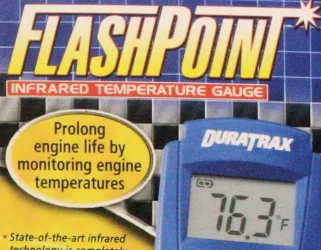
"Prolong engine life by monitoring engine temperature" as it says on the box.

u2builder, here are the RTF weighs.
comparison.webp
 

Attachments

  • Ammeter and Thermometer.webp
    Ammeter and Thermometer.webp
    230.1 KB · Views: 47
  • Prolong 2611.webp
    Prolong 2611.webp
    73.9 KB · Views: 58
  • 100-inch wings_2591.webp
    100-inch wings_2591.webp
    175.6 KB · Views: 60
  • three PRELUDE fuselages_2617.webp
    three PRELUDE fuselages_2617.webp
    134.4 KB · Views: 59
  • Dave with OLY-2 and RISER-100 _SAW-9090.webp
    Dave with OLY-2 and RISER-100 _SAW-9090.webp
    492.7 KB · Views: 66
Last edited:
I think I sealed my own doom by over propping the WANDERER-99.
Putting the burned out MVVS motor back in it's box (hey, I might be able to use the circlips or grub screws some day)
I studied the spec sheet. Seems like 3 cells like 11 and 12 inch props, 4 cells wants 8-inch props.

I shall lower the prop diameter and wait a little longer to reach thermal hunt altitude.
If in doubt, follow the instructions!
 

Attachments

  • MVVS motor info_2646.webp
    MVVS motor info_2646.webp
    296.2 KB · Views: 68
  • Dave with Wanderer 99 OCT 2024_JA-9308.webp
    Dave with Wanderer 99 OCT 2024_JA-9308.webp
    461.1 KB · Views: 63
  • WANDERER-99 Gifford's OCT 2024 SAW-0839.webp
    WANDERER-99 Gifford's OCT 2024 SAW-0839.webp
    216.3 KB · Views: 66
What version of the MVVS did you have? What size prop where you running, and what size battery? Curious to check the numbers.

If you have the 1200kv and ran a 11x7 on 4S you would have been pulling around 69 amps with the motor drawing 815 watts. The motor is listed as 500 watts max for 15 seconds.

Swap to 3S and all is happy, but best to go with a little larger ESC than a 40.
 
MOTOR: MVVS 3.5/1200 Sport Cat No. 2041
PROP: AeroNaut 12x6 folding
BATTERY: Gens Ace 2200 4-cell

> Swap to 3S and all is happy, but best to go with a little larger ESC than a 40.

Good advice. I will be doing both of those things.
 
Wow!! Yeah.. That was a bad combo. Amazed it worked for any time at all. You were pulling 78 amps and motor was up over 900 watts!

On 3S with that setup, you are OK'ish on the motor, basically at the 500 watt limit for 15 seconds on the motor and really should be on bigger ESC as you will be pulling 54 amps.
 
Well, I learned a lot on this little episode.
I give credit to the Hobbywing Skywalker Version 1 40 amp ESC for keeping the servos powered up
after the motor and the rest of the ESC smoked which let me save the plane, which I dearly love.
Did I mention your suggestion of "use MonoKote on ALL panels" got rid of the howl.
More lettering ordered for the new covering and she will be back in the air again soon.
 

Attachments

  • WANDERER-99 lettering 2576.webp
    WANDERER-99 lettering 2576.webp
    67.8 KB · Views: 58
I am curious what covering was used on those inner panels that allowed the wing to create that howl. Was the covering ironed on to each individual rib and turbulator after the general overall shrinking?* Did the how occur a typical gliding speeds? Powered or gliding. The Wanderer wing seems pretty study especially on the inner panel. I remember that for the OLY II it was recommended that only Monokote be use, and only with the grain in a certain direction. But transparent Monkote in certain colors is hard to find and it is hard to use covering efficiently while paying attention to the grain.

* This from the general build info on OZ for the Wanderer 99 but I've seen it for other vintage models: "There is one additional bit of information that for some reason was omitted from the book, be sure, and SURE is emphasized, that you seal your plastic covering material to every rib and spar, top and bottom. Don't just seal the covering to the leading and trailing edges then shrink with a heat gun. Oh! yes, it does make a beautiful covering, no bumps, no lumps, and absolutely no STRENGTH. Seal the ribs and spars then shrink the rectangles formed, this will give maximum strength."

I do this after I do an overall shrinking to remove wrinkles, check washout, etc.
 
Last edited:
I am curious what covering was used on those inner panels that allowed the wing to create that howl.

Neucover from Value Hobby

Was the covering ironed on to each individual rib and turbulator after the general overall shrinking?

No, not for either the Neucover or the MonoKote.
Looks like this was a serious neglect and a missed opportunity on my part.

Did the how occur a typical gliding speeds?

In flat glide, no sound.
In nose down a little to cover some ground, Halloween Howl.
In a dive to confirm CG, air raid siren.

Powered or gliding.

Not noticeable to me when under power. (Motor on generally at strong climb angles and thus lower air speeds.)
Soft murmur or annoying howl at any gliding speed faster than best L/D.
 
Back
Top